

OCTOBER 2
DJ_Dave
Hardware Software
DJ_Dave describes Hardcore Software as a “fully live coded album,” which she live coded using Strudel—a free, open-source, browser-based live coding environment used to create real-time algorithmic music.
The album represents a shift for the artist as she moves from fragmentary song experiences online to a more complete statement. The album also has an interactive companion application, m@lw@re, developed in collaboration with Computer Art, LLC for the single release, “Give it 2 me.” The application uses a listener's camera, location, computer information, and questionnaire responses to construct a personalized video in real time. (See how it works below.)
"I feel like I have, like, obviously a lot of, like, tech pessimism in the modern landscape of things," DJ_Dave recently told NPR, "but I also consider myself just, like, generally an optimist. And there's, like, a lot of things about tech that really excite me. And that was kind of, like, just how I felt making this album. I wanted to make songs that, like, make you feel like the future can be good."
Jon Hassell
Music Is Invisible (Pentimento Vol. Three)
While Fourth World jazz legend Jon Hassell passed in 2021, and the underlying performance used for this album was recorded in 2015, Music Is Invisible, the third in the artist's Pentimento series, has clear reason for making this list.
The album captures Hassell's final concert and includes Rick Cox on guitar, OP-1 synth and electronics, and John von Seggern on bass, drums and electronics. Hassell's live setup during this time saw him playing trumpet through an Ableton and Eventide software-based setup that von Seggern designed for him. Von Seggern also played processed loops and pieces of studio recordings from a computer, while Cox used his guitar to trigger loops, effects and atmospheres.
The live multitracks were then edited and mixed by Jeff Rona, integrating Hassell's approach to the pentimento method. Inspired by the visual art term wherein the visible trace of earlier strokes or images show through a painting's upper layers, Hassell's form of pentimento gathers fragments of performances to be sampled, looped, overdubbed and rearranged, an effect achieved through technological recombination.
Kaitlyn Aurelia Smith
RUIN: It's Not Just Music
Producer and Buchla virtuoso Kaitlyn Aurelia Smith merges classic voltage-controlled modular ideas and contemporary hardware on her latest release, RUIN: It's Not Just Music.
First premiered in May with the London Contemporary Orchestra at The Barbican in London, RUIN bends away from Smith's more traditional ambient approach to explore more excitable ideas in drum 'n' bass and EDM. Her specific accounting of the technology used on the album include: Buchla 200e, Buchla Music Easel, Moog Modular, Eurorack, Teenage Engineering instruments, and a Roland TR-1000, alongside processed voice and orchestral instruments.
Smith has said RUIN is "a bit of a fuck you album – but not to you, for you," and that the goal was to make “sonic forcefields” capable of making listeners physically experience impact. She recently told UKF, "There’s so much injustice in the world and so many assumptions. People are talking about it right now with AI and artists – the way people mine artists. It really fueled this music, and it came out really fast."
OCTOBER 16
Geologist & Kyle Simon
The Sirens
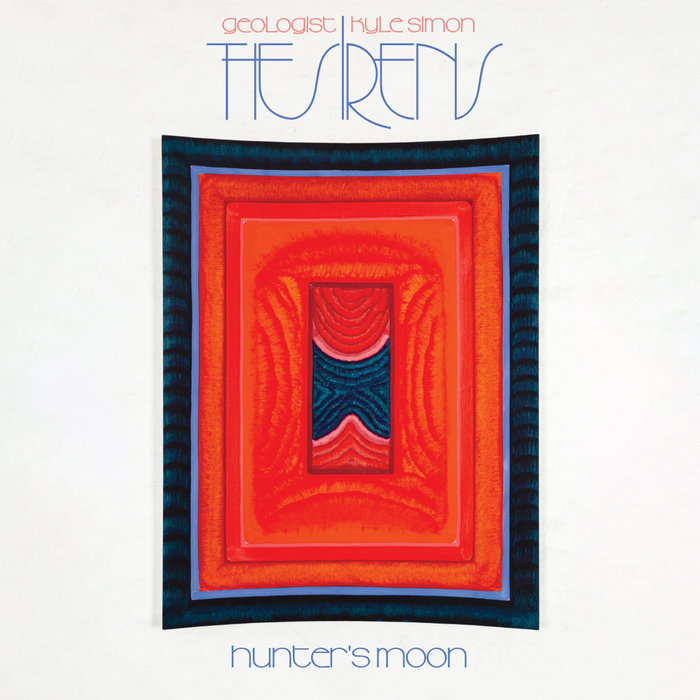
For The Sirens, Animal Collective member Geologist (Brian Weitz) and artist and printmaker Kyle Simon have teamed up to craft a cosmic drone soundtrack driven by celestial photosynthesis. Recorded during the 2024 Hunter's Moon in California’s high desert at Simon’s Farrington Observatory, the album offers a creative conversation with the stars as incoming celestial light acts as the music's engine.
Simon fitted a telescope with photodiodes that converted incoming light from the moon, stars, and planets into an electrical signal-cum-control voltage for Geologist's modular synthesizer, allowing him to alter pitch, filters and rhythm in real time. From there the duo "developed a system of improvisation, with Simon adjusting the telescope to change the intensity of the light based on its relationship with the moon’s position (imagine a theremin player moving their hands in subtle, meaningful motions), and Weitz responding to that input in real time: bending it, amplifying it, or letting it stand on its own."
 JTH
Max Richter
While The Flood Rages
Over 15 tracks and across three acts While the Flood Rages directly engages the ecological crisis, technological acceleration, and concerns surrounding human connection. The album opens with ‘Wave After Wave’, which follows the processed recording of the ocean as it transforms into an hypnotic, rhythmic pulse, while ‘Their Eerie Music’ introduces a fractured electronic language, built using electromagnetic recordings of internal technological systems found around the studio, hinting at a world shaped as much by machinery as by nature.
The Avalanches
No Bad Memories
For No Bad Memories, The Avalanches first album since 2020's We Will Always Love You, the group extend sampling beyond mere crate digging and into the sonic debris of consumer technology and corporate advertising. Co-founder Robbie Chater says the new record grew from exploring these forgotten sounds and using them as the raw material to build from. Even the track list foregrounds this obsession with digital detritus—“Xerox Altalink B8055,” for example—while collaborations with digital-art/sound pioneer Ryoji Ikeda and synthesizer pioneer Suzanne Ciani map the work of these past pioneers onto modern pop.
Two Shell
Infinite Now
In an appropriately cryptic statement anonymous UK electronic duo Two Shell say outright that they made their latest album, Infinite Now, “with the latest technology.”
Two Shell have openly acknowledged using AI as a creative tool for several years, describing it as “just another instrument.” On Infinite Now, the duo combine artificial, recorded and sampled vocals as part of a broader investigation into the increasingly uncertain boundary between human and machine creativity. The pair say the technology lets them ask questions about authorship, ownership, effort and whether expression needs to be human-made to feel genuine. The album extends into Infinite Now+, a 51-track companion collection conceived as mutable rather than fixed, with Two Shell suggesting tracks may continue to appear or disappear.
The terminally online pranksters blur software, performance, and persona into a heady mishmash of UK garage, post-dubstep, speed garage, techno, hyperpop, and bass music rather than treating production technology as a mere recording tool.
OCTOBER 23
Josh Johnson
Animative
While Josh Johnson plays in multiple ensembles, has produced albums by Flea and Meshell Ndegeocello, served as Leon Bridges’ musical director, and collaborated with a wide range of pop and indie artists, including Harry Styles and Bright Eyes, it's his solo work as an adventurous saxophonist that is perhaps most worthy of attention.
On Animative, saxophonist Josh Johnson doesn't simply play sax over a bed of electronics, he uses the instrument as a controller for samplers and drum machines, letting his performance trigger real-time changes in loops and effects. While Johnson plays the majority of the album's instrumental parts including synthesizer, sampler, piano, guitar, and drum synthesizer, bassist Ndegeocello, violinist Macie Stewart, and drummer Ben Lumsdaine are among those also on board.
Peder Simonsen & Jo David Meyer Lysne
Spektralmaskin II
Harry Partch be damned.
Spektralmaskin II is practically an experimental-instrument laboratory. Norwegian guitarist and composer Jo David Meyer Lysne uses self-designed e-bows drawn from repurposed magnetic technology to activate strings, and on this album the technique is used on a Steinway grand piano specially tuned to the duo's own microtonal system.
The ensemble further combines modular synthesis, microtonal tuba, and even vibrating speakers placed on percussive membranes to create a uniquely haunting sonic field.
 chamber pot blues
OCTOBER 30
Kali Malone
Burning Song
American minimalist composer, organist, and synthesist Kali Malone recorded Burning Song at Leipzig's Thomaskirche (St. Thomas Church) using its Bach Organ. The instrument was completed in 2000 but engineered with bespoke tuning and temperament systems based on Baroque-era practices. According to the album's notes Malone is the first musician to perform contemporary works on the organ and takes the opportunity to pursue microtonal harmony, while engineer Francesco Donadello used more than 20 microphones positioned throughout the church and close to the instruments to achieve dynamic spatial recording techniques.