

Mondo.NYC 2026 was a four-day music, technology, and business conference held between October 13–16, 2026, in Brooklyn, New York. Nearly 200 speakers appeared in more than 50 conversations, keynotes, and panels, alongside more than 30 artist showcases, demos, and a CLE law symposium.
What is the music business selling? If not exclusively albums, songs, or streams anymore, the answer increasingly appears to be relationships with artists.
That question is a useful way to consider several conversations about AI, music creation, and the business of music that arose from three specific sessions I attended at Mondo 2026.
The sessions provided three different ways into the subject:
- AI and creative workflows
- AI in artistic practice
- detection, attribution, provenance, and verification
As new technologies make the production of music easier and its distribution almost frictionless, questions about who made something, how they made it, who gets paid, and why people listen become harder to separate.
Mondo is an interesting place to hear these arguments. These gatherings have a good assortment of emerging artists, lawyers, and industry representatives from the labels, distributors, PROs, and early-stage startups. The concerns of someone building a music-technology startup are not necessarily those of a songwriter, a distributor, or an artist whose work is being used to train a machine. And yet they all increasingly occupy the same rooms.
A mix of professionals across multiple sessions suggests that the familiar arguments over whether AI is good or bad for music are less useful than examining what the technology actually does, who benefits from it, and what kinds of creative and economic relationships it makes possible.
From Stems to Vibes: Abundance Versus Scarcity
One of the day's more useful distinctions came from Dr. Mike Butera, founder of augmented listening app Felt, in a discussion with Jessica Powell of AudioShake and Dan Lilienthal of the work-in-progress app [untitled] titled, From Stems to Vibes: How AI Is Reshaping Our Relationship with Sound.
Butera's position was a total embrace of fair use, while identifying the problem as one of abundance versus scarcity.
That opens a much larger conversation than whether a particular AI tool can produce a convincing recording. Recorded music has long derived some of its economic value from forms of scarcity: access to recording facilities, production expertise, distribution, promotion, and an audience. Software has steadily reduced some of those barriers. Generative systems push the proposition much further.
What happens when creating a convincing recording is no longer especially difficult? Or when vast quantities of music can be produced without the conventional investments in performance and production?
The questions aren't only economic. Scarcity has influenced how musicians work, what gets recorded, and what audiences come to value. Removing limitations may make certain kinds of experimentation possible, while also reducing incentives to develop skills or devote time to decisions that can now be delegated to software.
Butera's broad embrace of fair use is one position within that argument, not a settled legal conclusion. It invites a question about whether the existing systems for protecting creative work are suited to an environment in which existing music can become material for generating more music on an enormous scale.
Jessica Powell of AudioShake offered a useful corrective: AI is more varied than the assumptions indicate.
This matters because the discussion too often begins and ends with fully generated songs from platforms such as Suno and Udio. But AI is also being used to separate stems, manipulate existing recordings, organize projects, generate or modify vocals, and assist production. Those uses may have little in common creatively, technically, or legally.
[untitled]’s Dan Lilienthal described building tools around workflow, recognizing that the more successful an artist is, the less they are "inside the box."
It's a telling observation. Artists with established practices and more developed creative identities may be less inclined to adopt a single prescribed way of working. Their processes can be idiosyncratic. Some make their most consequential decisions outside the software itself.
For music technologists, this presents a design problem: are they building tools that accommodate musical practices, or expecting musicians to reorganize their work around the capabilities and limitations of a product?
For educators, it suggests that teaching a particular platform and teaching creative judgment are not interchangeable activities.
AI in the Arts: What Are Artists Actually Making?
A separate conversation titled Spotlighting AI in the Arts with Lincoln Center featured multidisciplinary artists Nona Hendryx and Stephanie Dinkins, and served to widen the frame. The presence of artists working with AI, immersive media, and experimental practices is an important counterpoint to panels occupied primarily with licensing and commercial recordings.
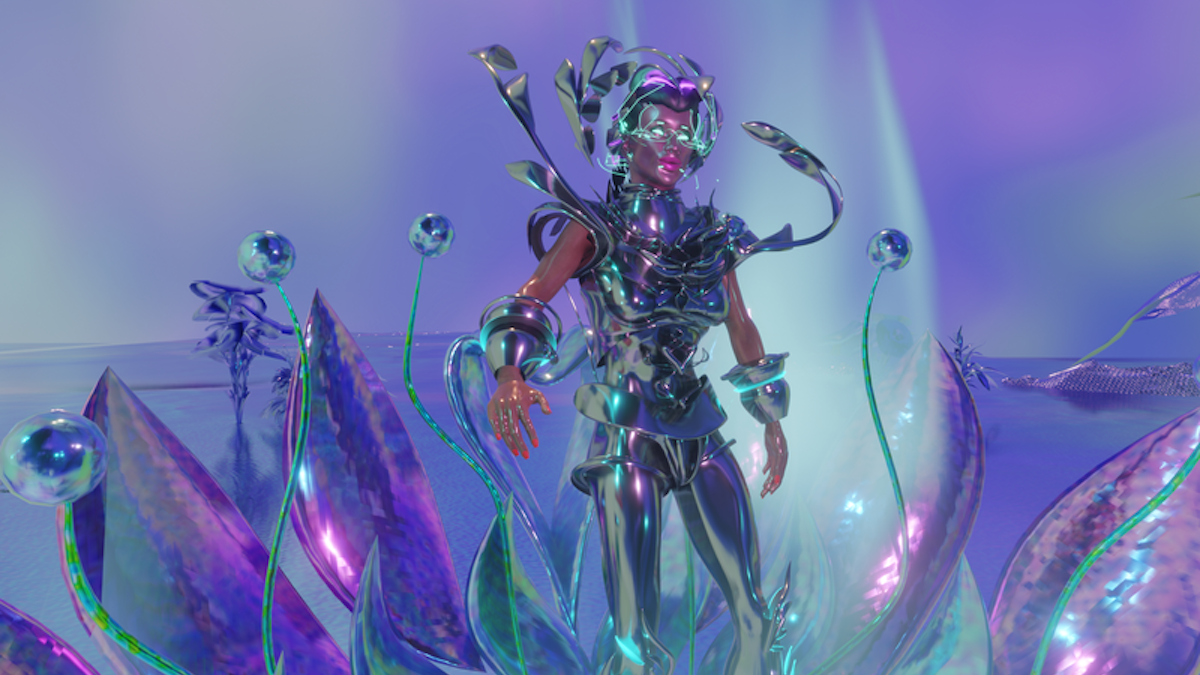
The issue is not simply how technology can reproduce activities that musicians already perform. It is also whether these technologies make possible forms of expression, participation, and performance that were previously impractical or unavailable.
There is a distinction worth making between using AI to accelerate an existing task and using it as part of an artistic experiment.
Both can be creative. But they ask different things of the musician.
One begins with a known outcome and looks for another way to achieve it. The other may begin with the capabilities or limitations of the technology itself, discovering an outcome through the process.
This is particularly relevant to music education, where professional preparation must coexist with experimentation. Students need to understand how tools are used in actual production environments. They also need opportunities to question what those environments presume music should be.
And how much of the work lies in knowing which tool to use, rather than knowing what to make?
Detection Is Not Attribution. And Neither Is Provenance.
The most technically detailed session, AI Detection: Who Gets Paid When the Machine Learns, brought together Matt Rose of Kobalt, Kevin Lazaroff of Amuse, Rasha Rahman of HumanStandard, and Timirah James of the Sonic Intelligence Academy (SIQA), moderated by Andrew Stess, Founder and CEO of StessCo Consulting Group.
The discussion examined how to determine whether music was created using AI, how to identify human contributions within it, and how those determinations should affect licensing, monetization, attribution, and trust.
One of its most useful contributions was clarification of terms that are frequently conflated.
Rose began by separating two broad categories:
- Generic AI refers to music generated in response to prompts, as with systems such as Suno and Udio.
- Derivative AI involves AI-assisted transformations or reuse of existing music, including covers, remixes, and other derivative works.
The categories raise different questions:
- If an artist generates a new recording from a prompt, what constitutes protectable human authorship?
- If they transform an existing composition or recording, what rights remain attached to the source material?
For creators, it may affect whether their contributions are recognized at all. For distributors, the difference could determine whether and how a track can be monetized. While for publishers, it affects the identification of underlying compositions.
AI disclosure, then, needs to describe what AI did, not merely whether AI was used.
Rose also drew a distinction between AI detection and attribution:
- AI Detection attempts to identify the probable involvement of a generative system.
- Attribution attempts to establish the relationship between particular training inputs and a specific output.
The latter is considerably more difficult.
Attribution might be based on aesthetic similarity, mathematical or vector-based relationships, or models that assign importance to the commercial significance of particular training works. But these approaches are not measuring the same thing.
If a musical work could have influenced a model without the resulting recording sounding recognizably similar to it.
What constitutes a compensable contribution to a generative model's output?
This is not simply a computational question. It concerns how the industry defines creative contribution and decides whose participation has economic value.
Rose also identified a circularity problem. AI-generated recordings may enter commercial catalogs and later become part of new training datasets. Without reliable detection and provenance, synthetic material can be repeatedly reintroduced into model training without being recognized as such.
The origins of music become increasingly difficult to establish.
Extension Questions
- What constitutes creative authorship when musicians work with generative systems? Where do we locate composition, performance, arrangement, production, and selection? Are there meaningful differences among these activities?
- How does abundance change the value of music? If producing a technically convincing recording becomes trivial, what becomes more valuable? What kinds of music-making become possible, and what kinds of expertise risk being discounted?
- What responsibilities do musicians have when working with AI-generated material from collaborators? How should attribution and disclosure be handled when human compositions, synthetic performances, and AI-generated elements appear in the same recording?
- Are music-technology developers building for actual artistic workflows or asking artists to fit themselves inside the box? How might students evaluate that distinction before adopting a tool?
- Does AI change the relationship between artists and audiences? If music itself becomes abundant, what gives audiences a reason to follow a particular artist? Is the relationship with the creator becoming more significant than the recording?
- What should students learn about AI that will remain useful when today's products disappear? Which skills are specific to a tool, and which concern creative decision-making, listening, rights, and the ability to adapt?
- What might an artistic practice built around generative systems actually look like? Could chatbot outputs become the basis of a new musical genre or performance practice? What would distinguish sustained artistic experimentation from simply using a new production method?
NYC Skyline Photo: Kai Pilger