Generative AI is growing so fast that it's difficult for researchers and lawmakers to keep up, and global approaches to generated AI copyright is as varied as each nation.
Below you'll find consistently updated overviews of major global generated AI copyright laws.
The following 12 nations offer the most striking differentiators on the global stage in response to generative AI and copyright. They boil down to anomalous legal statutory exceptions, landmark rulings, hyper-local cultural flashpoints, and industry singularities.
United Kingdom's Statutory Ownership Fiction
Section 9(3) of the Copyright, Designs and Patents Act 1988 stands as a global statutory anomaly. It explicitly creates a legal fiction awarding copyright protection to purely computer-generated works with no human author, assigning ownership to whoever "made the arrangements necessary for the creation." The UK Government Report on Copyright and AI 2026, released in March, stated it will not introduce a broad copyright exception for AI training and recommends the removal of Section 9(3), which states that for literary, dramatic, musical, or artistic works that are computer-generated the "author" is legally deemed to be the person who made necessary arrangements for the creation of the work are undertaken. This grants a 50-year copyright protection term to works created entirely by computers, treating the person who set up the system or ran the program as the legal author. New Zealand and Ireland have copied this model.
Ukraine's Sui Generis Regime
Rather than forcing machine outputs into traditional copyright, Ukraine created a unique 25-year sui generis legal regime under its Copyright Law. This protects economic rights for non-original computer-generated outputs without treating them as human authorship with rights reverting back to those holding rights in the software.
Protection via Prompting in China
In Li v. Liu, the Beijing Internet Court took a more permissive approach toward AI authorship than Western courts, ruling that a user’s strategic prompt engineering, parameter adjustments, and image selection demonstrated sufficient human aesthetic choice to grant copyright protection over an AI output. Though a March 2025 ruling denied protection for Midjourney "butterfly chair" images as insufficiently human-authored.
Japan's "Non-Enjoyment" Exception
Article 30-4 (added in 2018) lets works be used without permission when the aim isn't to enjoy their expression, such as for machine learning, unless it would unreasonably prejudice the owner. Japan has no general fair use doctrine, so this is a specific carve-out, and the test turns on purpose, not output. The Agency for Cultural Affairs' 2024 guidance says it fails where training aims to generate works similar to the training data, such as deliberate fine-tuning on one creator's work, and for retrieval-augmented generation. It also fails for copying datasets sold for analysis or protected by technical measures. Under Articles 47-7 and 49, using copies made under the exception to enjoy the work's expression is infringement. The guidance—not a court ruling—says an output merely in a creator's "style" isn't infringement.
South Korea's Royalty-Gatekeeper Whiplash
Korean copyright law protects creative expressions of human thought or emotion, so fully AI-generated music has no copyright, and that law has not changed. The practical gatekeeper is the Korea Music Copyright Association (KOMCA), the collecting society that decides which songs it registers for royalties. After refusing AI-made works since March 24, 2025, KOMCA began registering AI-assisted songs on August 3, 2026 when a human played a substantial, leading creative role, and could demand project files and prompt logs as proof. Lawmakers objected that a collecting society can't rewrite copyright rules, the culture ministry called for broader public debate on August 18, and KOMCA's board withdrew the policy on August 25, 22 days after it began. Fully AI-generated songs remain ineligible, and the standard is left to the National Assembly and government.
Australia & First Nations Cultural IP Protections
Standard Australian copyright law protects individual, human-made expressions for a limited time, but these protections specifically exclude communal, ancient, and traditional knowledge held by Aboriginal and Torres Strait Islander peoples. As such, Australia is in the process of creating standalone ICIP (Indigenous Cultural and Intellectual Property) laws to give indigenous peoples the legal right to stop fake First Nations artworks and souvenirs.
India's Proposed Mandatory Blanket Licence for AI Training
A December 2025 working paper from India's Department for Promotion of Industry and Internal Trade rejected both a free text-and-data-mining exception and purely voluntary licensing. It proposes that AI developers could train on any lawfully accessed copyrighted work without individual permission, with no opt-out for rightsholders. In return they would pay a fixed percentage of revenue into a central collecting body, the Copyright Royalties Collective for AI Training, including retroactive royalties for past use, and file training-data disclosures. It is only a proposal, and NASSCOM, India's tech industry body, warned it could act as a "tax on innovation."
Germany's "Memorisation Is Reproduction" Rulings
In GEMA v OpenAI (November 2025) and GEMA v Suno (July 31, 2026), Munich Regional Court I held that when a model memorises protected works, that memorisation can itself be an act of reproduction, outside the text-and-data-mining exception. In the Suno case the court applied German law to the service and U.S. law to the training done in the U.S., and ordered Suno to stop copying GEMA's works there for training. Both rulings are non-final, and OpenAI's is under appeal.
Denmark's Copyright-Style Right to Your Face and Voice
Denmark proposed amending its Copyright Act so people can block realistic AI imitations of their appearance and voice, with separate protection for performers' performances. The right would last 50 years after death and borrows copyright's takedown-and-compensation machinery, with exceptions for parody and satire. It was due to take effect March 31, 2026, but a snap election disrupted that plan and it has since faced ongoing pushback and criticism from the European Commission regarding its legal framework.
Brazil's Royalties on AI-Generated Venue Music
In 2025 a Santa Catarina appeals judge declined to suspend collecting society ECAD's public-performance charges against a theme park playing Suno-generated background music. The judge said the lack of a human author doesn't automatically put AI music outside copyright law, and cited a technical report finding similarity to a protected work. The ruling is interim and the first of its kind in Brazil.
Russia's Training Exception for "Sovereign" AI
Russia's framework AI law, passed by the Duma on July 8, 2026, creates "sovereign" and "national" categories for large foundation models. It includes an exception for training them on lawfully obtained or publicly available works, and requires providers to tell users about rights in outputs. It lists respect for "traditional Russian spiritual and moral values" among its principles. The IP and labelling rules take effect March 1, 2027.
Tennessee's ELVIS Act
Signed March 21, 2024 and effective July 1, 2024, the ELVIS Act makes voice a protected property right alongside name and likeness. It also creates liability for distributing tools whose primary purpose is producing unauthorised voice or likeness copies. It is widely described as the first U.S. state law of its kind aimed at protecting musicians from AI cloning.
🇺🇸 United States
Generative AI in the United States
The United States has long served as the engine of generative media, tracing its roots from early mainframe experiments like Lejaren Hiller's 1956 Illiac Suite to the 2020s explosion of commercial platforms like Midjourney, Suno, and Udio. As these text-to-media tools evolved from academic novelties into consumer applications, the software shift triggered an unprecedented industrial expansion. Silicon Valley's race for compute power transformed generative art and music into a massive physical infrastructure effort, driving hyper-scale data center expansions across hubs in Northern Virginia, Georgia, and Tennessee to sustain the compute demands of next-generation models.
Artist & Public Reaction
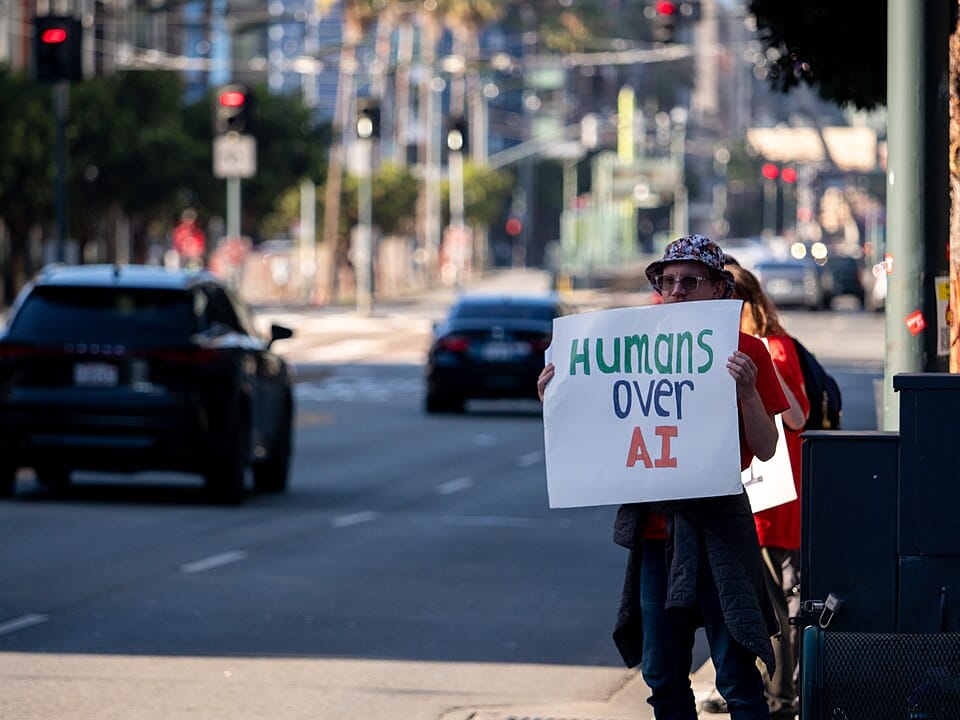
In April 2024, more than 200 artists signed the Artist Rights Alliance's open letter calling for an end to the "predatory use of AI" and warning of an "assault on human creativity." Executive rhetoric has fueled the backlash. Microsoft AI CEO Mustafa Suleyman said content on the open web is effectively "freeware," though he treated sites that explicitly bar scraping as a gray area. In a 2024 Stanford talk, Eric Schmidt described telling an LLM to copy TikTok, "steal" its users and music, and hire "a whole bunch of lawyers" if it took off. He said he wasn't arguing for illegal theft, and the video was later taken down.
The Law as It Stands
In March 2026 the Supreme Court declined to review Thaler v. Perlmutter, leaving in place the 2025 D.C. Circuit ruling that copyright requires human authorship. On training data, fair use remains contested, and the music industry's response has been a mix of settlements and escalation. On the data-ingestion front, corporate assertions that web-scraping constitutes protected "fair use" face ongoing scrutiny. In September 2026 a Third Circuit court found that AI training on copyrighted material does not constitute fair use, overturning a
High-stakes infringement lawsuits brought by recording labels against platforms like Suno and Udio have forced developers toward corporate licensing and revenue-sharing models with mixed results:
- In June 2024 the three major music publishing groups—Universal Music, Warner Music, and Sony Music—filed a joint lawsuit against Suno and Udio for mass copyright infringement.
- Universal Music Group settled with Udio in October 2025 while their talks with Suno stalled in April 2026. Warner Music Group settled with Suno and Udio in November 2025.
- UMG and Sony introduced a second lawsuit following the release of Suno V6 in September 2026.
- Sony also filed a $4.5 billion suit against Udio in July 2026 following their initial filing in 2024.
🇰🇷 South Korea
Generated AI History in South Korea
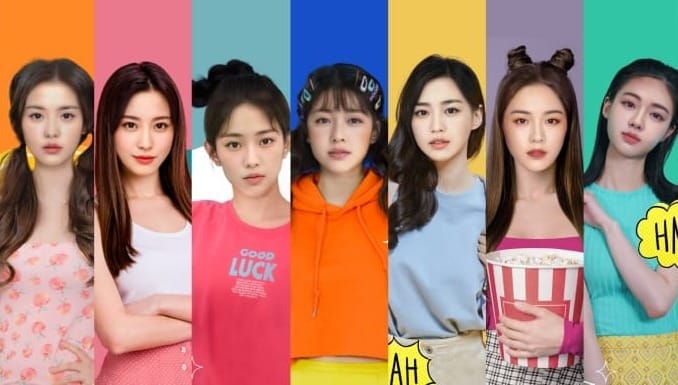
South Korea’s entry into synthetic music began early with 1990s cyber-singers like Adam, evolving rapidly into hyper-realistic virtual K-pop groups like Eternity (now rebranded as IITERNITI) and AI-driven voice synthesis tech. K-pop conglomerate HYBE quickly integrated the technology into mainstream releases—such as veteran South Korean singer-songwriter Lee Hyun's alter-ego Midnatt singing seamlessly in six languages on the track "Masquerade"—establishing the nation as a commercial sandbox for AI music production.
Artist & Public Reaction
While entertainment conglomerates embraced the tech, creators and industry bodies mounted fierce resistance over copyright exploitation and deepfakes. In response to widespread industry pressure, Korea Music Copyright Association (KOMCA) Chairman Lee Si-ha announced stricter safeguards, noting that institutional guardrails are essential "to formally recognize AI-assisted creative practices while safeguarding the rights of human creators" against low-effort "one-click composing."
The Law as It Stands
South Korea recently went through a mini-drama in August 2026 as KOMCA loosened its rules regarding registering works assisted by artificial intelligence. Later the same month they reversed that decision as the ministry of culture said the issue required broader public discussion. Korean copyright law defines a work as a creative production expressing human thoughts or emotions, so music made through AI tools cannot claim copyright.
🇦🇺 Australia
Generative AI History in Australia
Australia's legacy in algorithmic composition began with the 1979 release of the Fairlight CMI, a Sydney-built digital synthesizer that revolutionized sampling worldwide. In 2020, Sydney studio Uncanny Valley won the inaugural international AI Song Contest with their song "Beautiful World," demonstrating the nation’s modern technical capabilities. Today, Australian research institutions and creative studios actively integrate generative models into commercial sound design and visual media, placing the country at the forefront of human-machine creative tools.
Artistic & Public Reactions
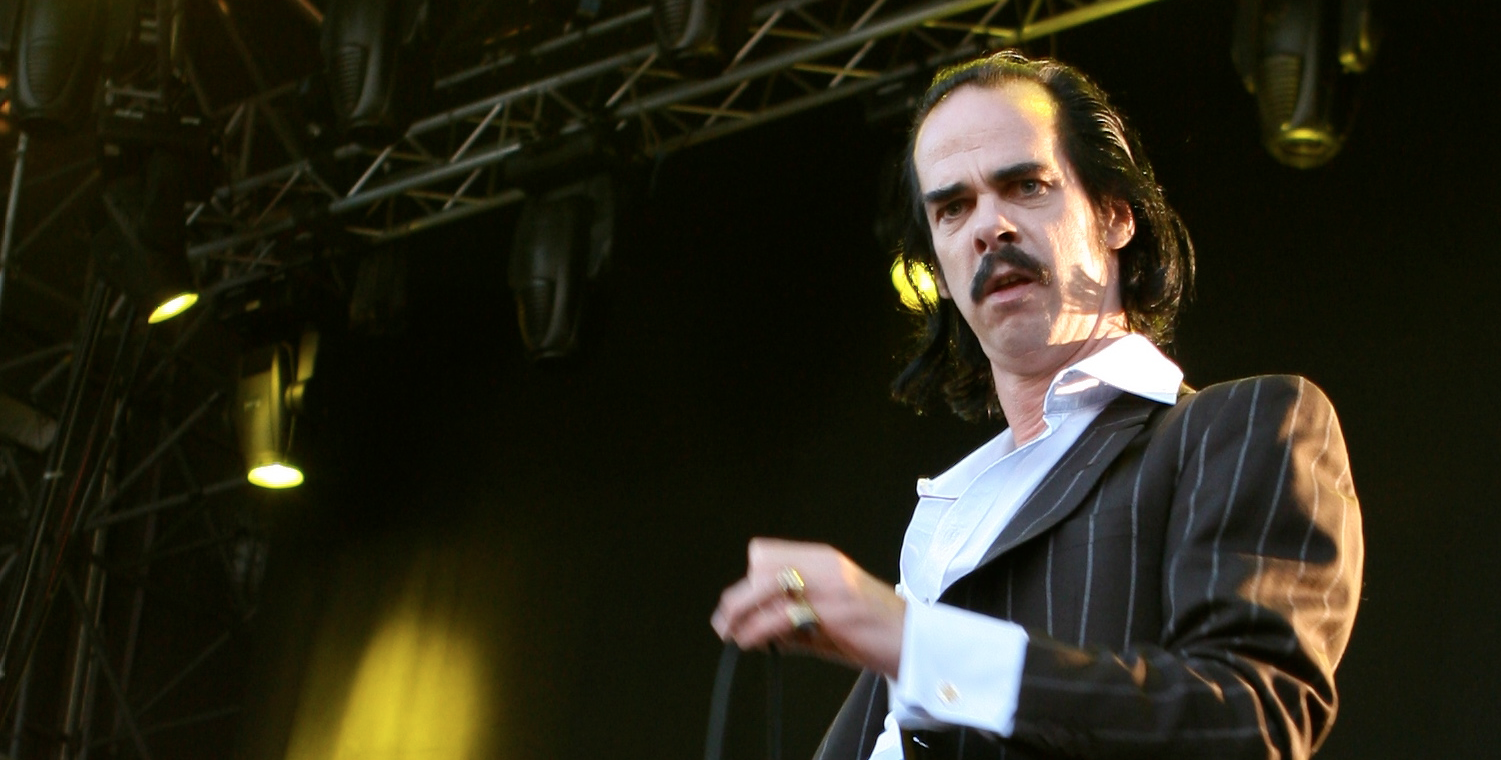
Australian creators are among the most vocal global opponents of uncompensated generative training. Musician Nick Cave famously criticized AI lyrics mimicking his style as a "grotesque mockery of what it is to be human." Concurrently, First Nations artists and legal advocates raised urgent concerns regarding generative models scraping Indigenous art styles, warning that automated generation threatens sacred cultural motifs, communal intellectual property, and centuries of traditional heritage.
The Law as It Stands
Australian copyright jurisprudence adheres strictly to the requirement of human authorship. Under the precedent established in Telstra v Phone Directories, the High Court ruled that copyright protection requires demonstrable human intellectual effort. The Copyright Act 1968 contains no broad text and data mining (TDM) exception, meaning training generative models on copyrighted Australian works without a license exposes developers to infringement claims. The government ruled out an EU-style TDM exception on October 26, 2025 and is exploring licensing, which is currently limited and leaves most right holders unable to receive any remuneration for works used in training sets despite Australia’s broad copyright protections.
🇺🇦 Ukraine
Generative AI History in Ukraine
Ukraine’s engagement with generative AI has been profoundly shaped by its ongoing war. The nation’s highly resilient IT sector rapidly pivoted to dual-use technologies, utilizing AI for military intelligence, open-source data analysis (OSINT), and countering massive disinformation campaigns. Simultaneously, generative media has been deployed by civil society and government agencies to generate global awareness, document destroyed cultural heritage, and run international fundraising campaigns.
Artistic & Public Reactions
Ukrainian artists have utilized generative tools to express wartime realities and conceptualize post-war rebuilding, but they also fear the cultural appropriation of Ukrainian art by foreign AI models. The public possesses a hyper-awareness of AI’s dangers, stemming from real-world weaponization—most notably the March 2022 deepfake of President Volodymyr Zelensky falsely urging soldiers to surrender, which cemented national vigilance against synthetic media.
The Law as It Stands
As part of its broader effort to integrate with Europe, Ukraine is aligning its digital policies with the EU AI Act. Notably, Ukraine passed a progressive new Law on Copyright and Related Rights (No. 2811-IX) in 2022. Taking effect on January 1, 2023, the law explicitly addresses "non-original objects generated by a computer program." It denies traditional copyright to AI outputs but grants a unique sui generis right to the person or entity who generated the work, protecting it from unauthorized use.
🇷🇺 Russia
Generative AI History in Russia
Following international sanctions and limited access to Western technology, Russia has accelerated the development of a sovereign generative AI ecosystem. Domestic tech giants like Yandex and Sberbank have built powerful indigenous models, such as YandexGPT and the Kandinsky image generator. These tools are heavily integrated into domestic enterprise software, consumer applications, and state media operations, ensuring technological independence in the generative space.
Artistic & Public Reactions
Public adoption is driven by the necessity of using the domestic tech ecosystem, though independent artists and designers have echoed global concerns over uncompensated scraping of their portfolios. However, public discourse is heavily moderated. The most significant concern revolves around the use of generative technologies by both state and non-state actors for information control, propaganda, and deepfake generation in the context of geopolitical conflicts.
The Law as It Stands
Russia has no comprehensive AI copyright regime, and the Civil Code does not recognize AI as an author. In July 2026 the State Duma passed a framework law, "On Supporting the Development of Artificial Intelligence Technologies," which the Federation Council approved on July 24, 2026. It covers only large foundation models and creates "sovereign" and "national" model categories. It also includes an exception for using lawfully obtained or publicly available works to train those models. Providers must also tell users about rights in AI-generated outputs. The law lists respect for "traditional Russian spiritual and moral values" among its principles. Most provisions take effect September 1, 2026, with the IP and labelling rules taking effect on March 1, 2027.
🇫🇷 France
Generative AI History in France
France is aggressively establishing itself as the AI capital of Europe, championed by heavy government investment and a thriving open-source ecosystem. Paris-based startups like Mistral AI and connections to Hugging Face have positioned the country as a global leader in foundational model development. The state views generative AI as crucial to European technological sovereignty, aiming to build models that reflect French language and cultural values.
Artistic & Public Reactions
France possesses a deeply entrenched tradition of droit d'auteur (author's rights), which frames art as an extension of the creator's personality. Consequently, French authors, illustrators, and musicians have reacted with intense hostility toward AI scraping, viewing it as a fundamental violation of moral rights. A landmark joint study published in January 2024 by France's Sacem (Society of Authors, Composers and Music Publishers) and Germany's GEMA revealed that 95% of surveyed creators in France demand strict transparency from tech companies and want politicians to reinforce copyright rules. Creators have demanded strict opt-in consent mechanisms, transparency mandates, and compensation models to protect the nation's cultural heritage.
The Law as It Stands
France’s domestic laws operate under the umbrella of the EU AI Act, which requires general-purpose AI developers to respect EU copyright law and publish detailed summaries of their training data. Domestically, French courts strictly interpret copyright as requiring a "human imprint," rendering AI-generated outputs largely unprotectable. French cultural lobbying was instrumental in ensuring the EU's text and data mining exceptions contained mandatory opt-out rights for creators.
The Darcos Bill was filed in the Senate in December 2025 and would presume protected works were used by AI providers when indications make it plausible. The Conseil d'État endorsed the filing on March 19, 2026, but the National Assembly dismissed the bill in May 2026—a political opinion rather than a legal ruling—leaving rights holders to rely on Article 53 of the EU AI Act, which mandates transparency, copyright, and documentation obligations, specifically for providers of General-Purpose AI (GPAI) models.
🇯🇵 Japan
Generated AI History in Japan
Japan helped pioneer synthetic music culture. Yamaha's Vocaloid voice-synthesis engine powered Crypton Future Media's Hatsune Miku, released in 2007, which grew into a virtual pop star with a global fan community that produces and shares its own songs. Under Article 30-4 of its Copyright Act, Japan also allows copyrighted works to be used for information analysis, including machine learning, which has made it one of the more permissive jurisdictions for AI training.
Artist & Public Reaction
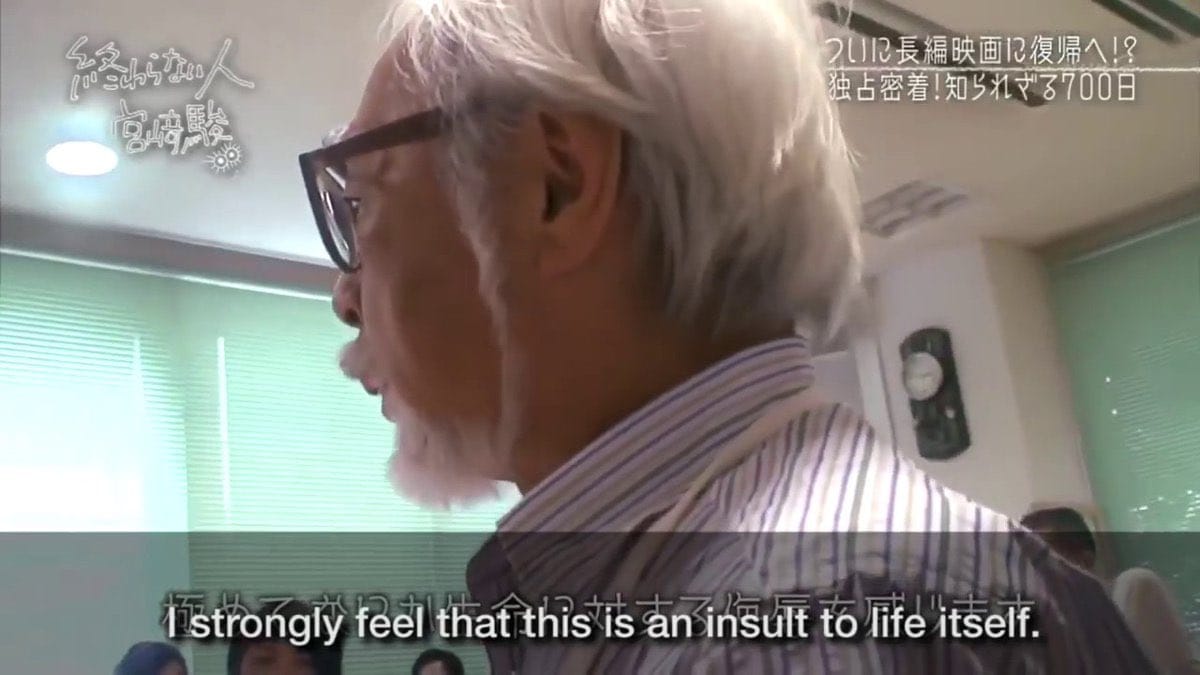
Japanese creators have pushed back hard, particularly in anime and voice acting. In a 2016 NHK documentary, legendary Studio Ghibli director Hayao Miyazaki infamously decried a disturbing early AI animation experiment stating, "I strongly feel that this is an insult to life itself." In October 2024, 26 well-known voice actors, including Ryusei Nakao and Yuki Kaji, launched the NOMORE ("No More Unauthorized Generative AI") campaign. They aren't against the technology as such but want dialogue and rules to stop the unauthorized use of their voices. Kaji has also released his own licensed voice synthesizer.
The Law as It Stands
Article 30-4 permits use of works for data analysis, including AI training, unless the purpose is to enjoy the work's expression or the use would unreasonably prejudice the rights holder. The Agency for Cultural Affairs' 2024 guidance says it doesn't cover generating material similar to the works used, commercially supplied analysis datasets, or material behind technical access controls. On September 30, 2026, the Tokyo District Court dismissed voice actor Kenjiro Tsuda's takedown claim against TikTok's operator because the videos had already been deleted. It found that a person's voice can be protected under publicity rights, the first such ruling in Japan. It did not decide whether Tsuda's own rights were infringed.
🇬🇧 United Kingdom
Generative AI History in the United Kingdom
The UK has a storied history in artificial intelligence, anchored by London-based powerhouses like Google DeepMind. The nation has cultivated a thriving generative AI startup ecosystem while simultaneously boasting some of the world’s most influential creative industries—spanning literature, music, and television. This collision of world-class AI research and a massive traditional media sector has made the UK a primary battleground for the future of synthetic media.
Artistic & Public Reactions
The UK creative sector has mounted fierce resistance. Organizations like the Society of Authors and the musicians' union have heavily protested unauthorized training, while actors' equity unions have campaigned vigorously against exploitative voice and likeness contracts. The public backlash was galvanized by high-profile lawsuits, such as Getty Images suing Stability AI in the UK High Court.
The Law as It Stands
The UK initially proposed a broad text and data mining (TDM) exception for commercial AI training but abandoned it following massive uproar from the creative industries. Uniquely, the UK’s Copyright, Designs and Patents Act 1988 protects "computer-generated works" without a human author, assigning rights to the person who made the arrangements for the creation.
🇸🇬 Singapore
Generative AI History in Singapore
Singapore has positioned itself as a premier enterprise AI hub through aggressive government support and its "National AI Strategy 2.0." The city-state is leading the development of Southeast Asian-focused models like SEA-LION to capture regional linguistic nuances. Rather than focusing on consumer media, Singapore’s ecosystem is deeply integrated into finance, smart city infrastructure, and international business, fostering a pragmatic, commercial approach to generative technology.
Artistic & Public Reactions
Public reaction in Singapore has been largely pragmatic, with a strong cultural emphasis on upskilling to work alongside AI rather than resisting it. While local creators and designers express concerns over fair compensation and unauthorized dataset scraping, the overall sentiment is tempered by high public trust in government regulatory frameworks and proactive initiatives aimed at mitigating deepfake fraud and identity theft.
The Law as It Stands
Singapore's Copyright Act 2021, in force since November 2021, includes a computational data analysis exception (sections 243–244) that expressly covers machine learning, for commercial and non-commercial use. Users must have lawful access to the works and generally can't pass them on to third parties. The government relies on voluntary frameworks like AI Verify rather than heavy regulation. Singapore also keeps human authorship as the basis for copyright protection. On August 26, 2026, the Ministry of Law and IPOS opened a consultation, running to October 22, on whether the exception's scope and the concept of lawful access are clear enough.
🇮🇳 India
Generative AI History in India
India has rapidly integrated generative AI to serve its massive IT services sector and diverse, multilingual population. Domestic tech companies have launched localized large language models, such as the Indic-language BharatGPT and Krutrim, aiming to bridge digital divides. Generative tools are heavily utilized in enterprise automation, customer service, and notably in political campaigns, where AI-generated audio and hyper-personalized video messaging have reshaped voter outreach.
Artistic & Public Reactions
The vibrant Bollywood and regional cinema industries have pushed back aggressively against unauthorized voice cloning, digital likeness replication, and AI-generated music. Meanwhile, the broader public has raised severe alarms regarding the proliferation of political deepfakes and non-consensual synthetic media. IT professionals and business process outsourcing (BPO) workers also express ongoing anxiety about large-scale job displacement caused by automated generative platforms.
The Law as It Stands
India has not yet passed a dedicated AI act, relying instead on the Information Technology Act to police deepfakes and hold social media intermediaries liable for synthetic misinformation. Under the Copyright Act of 1957, Indian courts and the Copyright Office maintain that authorship requires a human creator, rejecting copyright applications for purely AI-generated works. There is currently no explicit data mining exception, leaving the legality of training on copyrighted Indian works in a gray area.
The DPIIT's December 2025 working paper proposes a mandatory blanket license with statutory remuneration, which has not been enacted into law, while the Delhi High Court dismissed ANI's interim injunction application against OpenAI on July 24, 2026.
🇧🇪 Belgium
History of Generative AI in Belgium
Belgium’s involvement in computer-generated art grew out of its prominent electronic music scene and European digital media hubs like BOZAR in Brussels. Local software developers and academic institutions have contributed to early algorithmic sound synthesis and interactive installation art, integrating machine learning tools into sound architecture and visual art production across Flanders and Wallonia.
Artistic & Public Reactions
The Belgian creative sector reacted strongly to synthetic vocal cloning, particularly following the success of viral AI-generated track, "Papaoutai" by Stromae. Local authors' society SABAM voiced deep concern over scraping, aligning with broader European artistic coalitions to demand transparency and fair remuneration. Creative unions argue that generative platforms dilute creator revenues while exploiting Flanders' and Wallonia's rich cultural output.
The Law as It Stands
As an EU member state, Belgium operates under the European Union AI Act and the Digital Single Market (DSM) Directive. The Belgian Code of Economic Law conditions copyright protection on the presence of a human author's personal creative choices. Under Article 4 of the DSM Directive, rights holders can formally opt out of commercial text and data mining, prohibiting AI developers from scraping their works without a license.
🇧🇷 Brazil

History of Generative AI in Brazil
Brazil's adoption of generative media builds on a history of musical innovation spanning Tropicália to modern Sertanejo. In the early 2020s, generative tools penetrated mainstream Brazilian media, showcased by a controversial Volkswagen commercial that used AI deepfake technology to resurrect deceased Música Popular Brasileira (MPB) icon Elis Regina for a duet with her daughter, Maria Rita.
Artistic & Public Reactions
The Elis Regina advertisement sparked an immediate national debate and an investigation by CONAR (Brazil's advertising self-regulatory body) into the ethical boundaries of posthumous digital resurrection. Musicians and visual artists have forcefully opposed AI voice cloning and unauthorized style scraping, leading the Central Office of Collection and Distribution (ECAD) to demand regulatory intervention to safeguard creator livelihoods from automated duplication.
The Law as It Stands
Brazil's Law No. 9.610/1998 defines authors as natural persons. In 2025, however, a Santa Catarina appeals judge refused to suspend collecting society ECAD's charges to bvrazil a theme park that played Suno-generated background music. The judge said the absence of a human author doesn't automatically take AI-generated music outside the copyright law. He cited a technical report showing similarity to protected works, and held that collection doesn't depend on identifying each work. It is an interim ruling, but the first Brazilian decision of its kind. Meanwhile, Bill PL 2338, which would let rights holders block AI training or be paid for it and require training-data transparency, passed the Senate in December 2024 and is currently stalled in the Chamber of Deputies as of October 2026.
🇨🇳 China
History of Generative AI in China
China has emerged as a powerhouse in generative media, driven by tech giants like Baidu, Tencent, and ByteDance developing indigenous large language and visual models (such as ERNIE and Sora rivals). Early adoption flourished through virtual idols like Luo Tianyi, laying the groundwork for a commercial ecosystem where state-supported AI infrastructure powers automated illustration, voice synthesis, and digital video production at scale.
Artistic & Public Reactions
While commercial adoption is high, traditional ink painters, voice actors, and manhua (comics) illustrators have staged significant online protests against unauthorized dataset scraping. Public concern has focused on deepfake fraud and identity theft, prompting swift intervention from state media and regulatory bodies to enforce digital authenticity and protect individual likenesses from non-consensual synthetic replication.
The Law as It Stands
China’s judiciary has taken a progressive stance on user-driven AI creation. In the landmark 2023 case Li v. Liu, the Beijing Internet Court ruled that an AI-generated image could receive copyright protection because the human creator exercised personalized selection, prompting, and parameter adjustment. Regulators like the Cyberspace Administration of China (CAC) enforce strict "Deep Synthesis" regulations, requiring visible watermarking on all AI-generated content and explicit consent for vocal or physical likeness cloning. Newer 2025 labeling measures require explicit visible labels at the start, end, or within content and implicit machine-readable labels via metadata.
A March 2025 ruling denied protection for Midjourney images as insufficiently human-authored, while a September 2025 ruling from the Beijing Internet Court requires creators to document their creative effort.